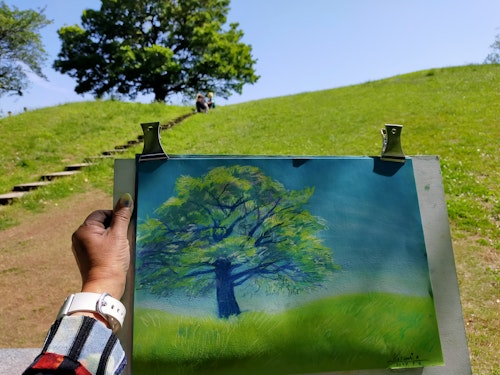

Pastel is a medium that produces beautiful gradations without any special technique — making it one of the most accessible art forms there is. From quick sketches on the road to expressive studio works, a single set of pastels is surprisingly versatile. This article introduces the basics of pastel and shares my own approach to working with it.
The Basics of Pastel
The word "pastel" derives from the Latin for paste or powder. Pastel drawing involves rubbing pigment sticks across textured paper, leaving a layer of soft, powdery color. Mistakes can be erased and areas reworked freely — making it a forgiving and approachable medium even for complete beginners.
Among the most celebrated pastel works are Edgar Degas's The Dancer and Odilon Redon's Wild Flowers in a Long Vase, both of which showcase the medium's remarkable range.
.jpg?w=300&h=436)
What Sets Pastel Apart
Pastel's greatest strengths are its lyrical, soft color palette and its portability. Because the pigment is simply powder held together with a binder, all it takes is placing color on the paper and blending with a fingertip — beautiful gradations appear almost instantly. The term "pastel color" exists for a reason: this medium naturally lends itself to gentle, luminous tones.
With minimal equipment and nothing to set up, pastels are ideal for outdoor sketching and figure drawing. They are especially well-suited to capturing rapidly changing light — dawn, dusk, and reflections on water — because there is no drying time to wait for.
My Process
I work on tinted pastel sketchbooks. The paper's own color contributes depth to the finished work while reducing the time needed to fill the surface.
I never sketch in advance. Instead, I begin by establishing the sky in pure color, then set the horizon line, and work progressively from the distant background through the middle ground to the foreground.
News

Blog
Contact